
Sources for Hamilton County Previous Residents
The best source for previous residents changes with the period and the question. A current parcel record supplies the link from street address to legal description. Recorded instruments trace title, while address-first directories and census schedules can identify people listed at the property in a specific year. Those are different forms of evidence. Keep an owner, a tax-bill addressee, and a historical listed household in separate columns until the dates and record roles support a connection.
| Historical source | Period available | Where it is kept | What it can establish |
|---|---|---|---|
| Recorder deed index | 1789 to present index coverage | Recorder Acclaim, historic books, and counter | Recorded parties, document placement, and legal-description trail |
| Ordinary Acclaim name search | Most material from 1988 forward | Recorder Acclaim | Modern recorded documents and available images |
| Grantor and grantee deed books | 1914 to 1988 | Recorder Historic Search, then Acclaim Book/Page | Seller-to-buyer and buyer-to-seller index paths |
| Auditor transfer and ownership material | 1937 forward per CHPL; duplicate cards about 1940 | Auditor property search and counter | Parcel, transfer, owner-card, and legal-description context |
| Pink Pages and Criss-Cross | 1925; title Criss-Cross by 1941 | CHPL directory collection | Address-to-listed-householder or business trail |
| Federal census and historic maps | Census 1790 to 1950; maps vary by series | CHPL computers, digital library, and archives | Household context, building, and numbering evidence |
Begin with the Auditor for a known Hamilton County address, then move to the Recorder for the recorded transaction. If an online result is incomplete, use the documented counter, library, archive, or narrow public-records request route rather than treating a web result as the whole history.
Hamilton County Previous Resident Starting Point
Start the previous residents trail with the Hamilton County Property Search. Its Street Address, Owner, Parcel ID, Sales, and Advanced routes connect a present street address to a parcel. Capture the parcel number, current situs address, current owner, transfer information, and legal description. The situs is the physical property address. A mailing or tax-bill address may differ, so it is a correspondence label, not a statement about who is at the site.
Open the Transfer and Ownership Card before chasing a historical deed. The County's guide cautions that a January 1 transfer date can be a filler date. When the result says to see the Ownership Card, use that card for the older actual date. The legal description, lot or subdivision, and prior-instrument reference are the stable bridge when street names, numbering, or parcel configuration have changed.
Record boundary. A property owner or tax-bill addressee is not automatically an occupant, so previous-resident research needs a dated directory, census, or other appropriate second source.
Hamilton County Previous Resident Recorder Trail
The Recorder's online document indexes reach from 1789 to the present, but index coverage, scan availability, and ordinary name searching do not have the same cutoff. For most records from 1988 forward, the ordinary Acclaim name search is generally sufficient. For earlier material, the Historic Search path becomes central. An address is not the Recorder's primary key, so use the parcel or Auditor number, the legal description, the current or former party name, and the book or page reference as the record calls for.
The Recorder Historic Search gateway also provides the 1913 Cincinnati Street Index, older maps, registered-land material, and other historical record paths. It is the better fallback when a modern result stops at a date boundary. The Recorder counter is at 138 E. Court St., Room 205, and the guide lists weekday hours of 7:30 a.m. to 4 p.m. Mail or copy procedures and the counter remain appropriate options when a particular image is not available online.
The historic records gateway is the source shown for this Hamilton County previous residents deed path.
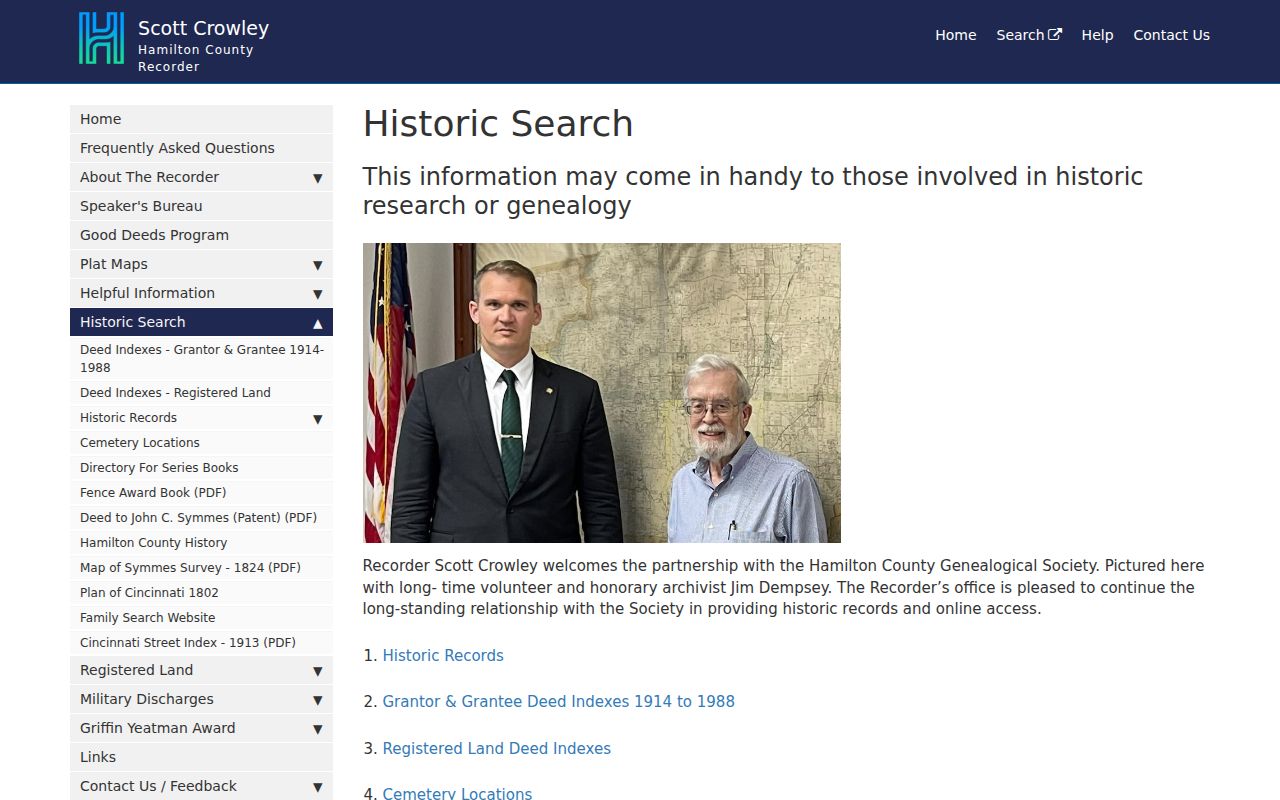
Its separate historic routes help preserve the link between a parcel, a record book, and the dated document instead of forcing an address into an unsuitable field.
Trace Hamilton County Past Deeds Backward
A chain of title is the sequence of recorded transfers for a parcel. In the recorded deed relationship, a grantor is the party transferring an interest and a grantee is the party receiving it. Walk the chain from a documented later transfer to the preceding one, rather than assuming every person with the same surname belongs in the same trail. For past residents, this establishes the property side of the history. It does not by itself identify every person who lived there.
- Use the Auditor result to record the parcel, legal description, current transfer data, and the Transfer or Ownership Card details.
- Search Acclaim by party, Auditor number, legal description, or document reference to locate the later recorded instrument.
- Record the grantor, grantee, recording date, document number, book or page, and prior-instrument reference.
- Use the seller as the earlier grantee, then repeat the lookup against the same legal description or parcel context.
- For the historical index era, follow the grantor-to-grantee or grantee-to-grantor book direction and retrieve the cited image through Book/Page.
- Legal description
- The lot, subdivision, plat, or metes-and-bounds identity recorded for land. It often outlasts a changed street address.
- Chain of title
- The dated succession of recorded instruments that transfers or affects an interest in the same property.
- Book/Page search
- The Acclaim route that retrieves an older recorded item when a historic index has supplied its book and page reference.
Hamilton County Past Deeds by Book/Page
For documents before mid-1988, use the grantor and grantee deed books that cover 1914 to 1988. Grantor-to-grantee follows seller to buyer. Grantee-to-grantor follows buyer to seller. Select the relevant year and first letter, note the book and page, and then use Acclaim's Book/Page path. This is a different workflow from a modern name search and prevents a false conclusion from an empty newer-style result.
The Acclaim Book/Page search is the retrieval step after a historic index hit.
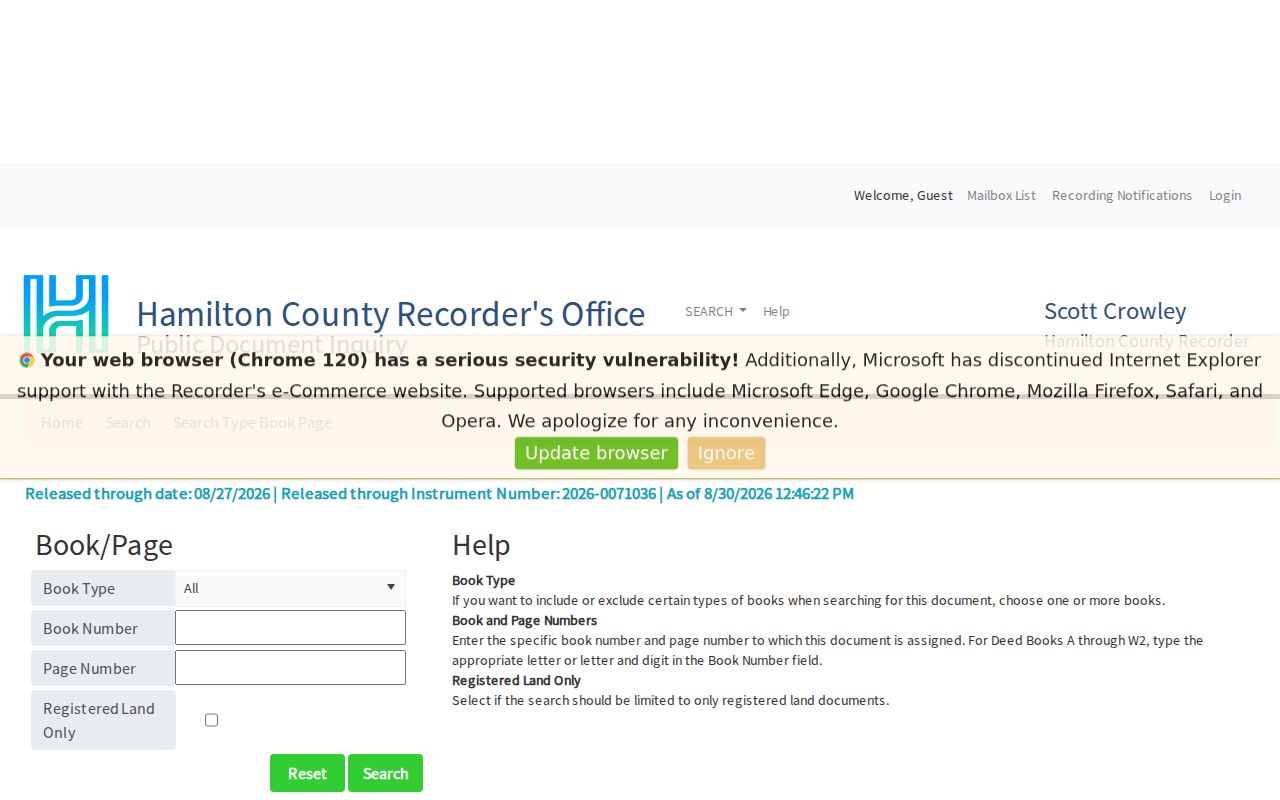
The Recorder warns that digitized historic scans can be offset by a page or two, so use the image arrows when the cited page does not appear immediately.
Research tip. Keep the historic book and page in the research log, then check the adjacent scan pages before deciding that the recorded instrument is missing.
Hamilton County Previous Resident Numbers
Most Cincinnati street numbers changed in 1895. CHPL frames the change generally as 1895, while HCGS says business numbers changed in 1895 and residence numbers in 1896. Treat that difference as a prompt to check the source year, not a reason to force all addresses into one conversion. The Recorder Historic Search includes a 1913 Cincinnati Street Index, and nearby maps offer another way to test an old address.
CHPL identifies 1891 Sanborn maps as old-number evidence and maps from 1904 forward as new-number evidence. The 1883 and 1884 Robinson atlas adds core-city building and old-address context. Use a map year that fits the directory, census, or document date. An address conversion should be recorded as a research finding, not silently substituted into a deed or historical listing.
Note: A changed number can signal renumbering, a move, a boundary change, or a different parcel, so preserve both forms until the map evidence resolves them.
Past Households in Hamilton County
Ownership is only one layer of a past-resident search. CHPL city directories reach back to 1819, and the Pink Pages from 1925, followed by Criss-Cross by 1941, offer the address-first layer. Use them to find the listed householder or business at a location for a particular year. The full collection history and entry-reading method are available in the Hamilton County city directories.
Pair a directory year with the appropriate federal census, which is public through 1950, and then compare a Sanborn or Robinson map when the address itself needs context. The census can add relationships and birthplace information that directory listings do not provide. Keep the year visible in every note. A printed directory is contemporaneous evidence, but it is not proof of a complete household or ownership.
The National Archives census research material is a useful source for understanding the federal census side of a Hamilton County previous residents trail.
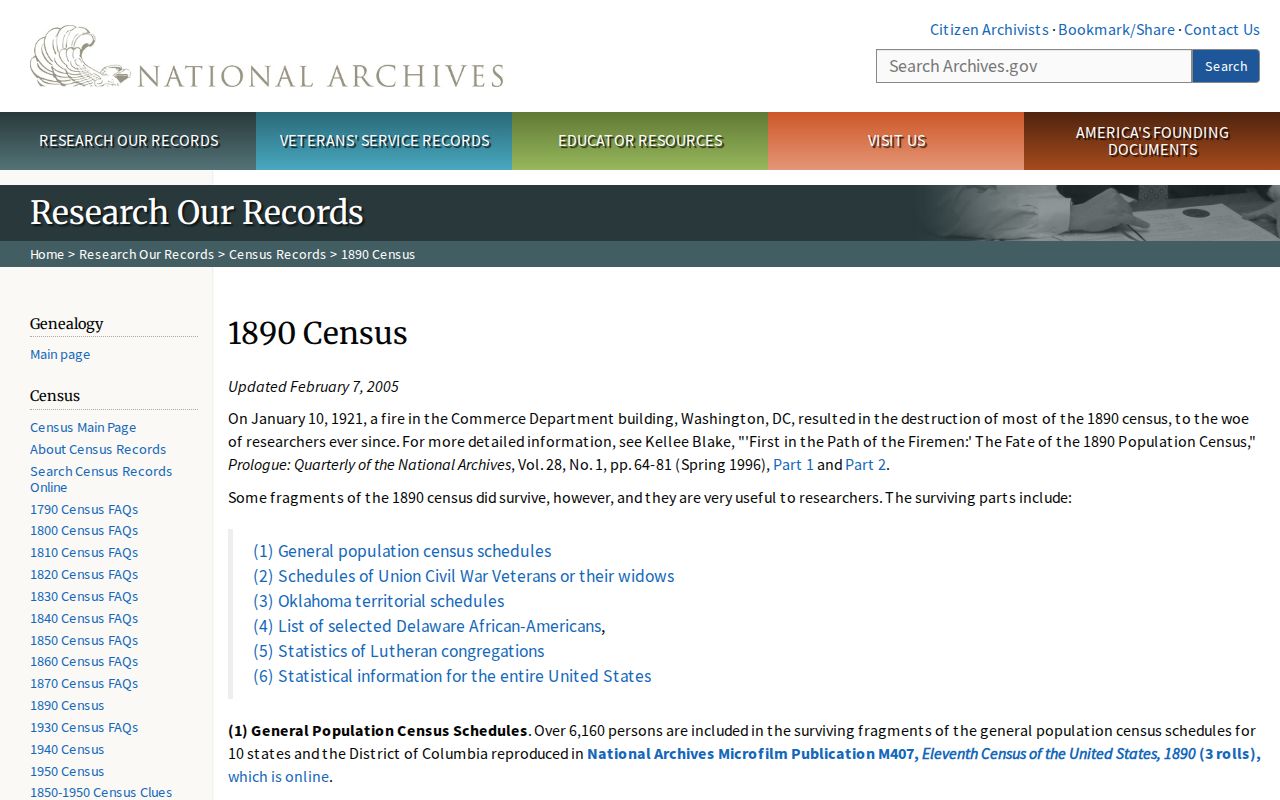
Use the census date alongside the directory date rather than merging evidence from separate years into one undated household claim.
Hamilton County Probate and Record Gaps
Probate can close a past-resident trail with estate, will, guardianship, marriage, or related historical context. The Hamilton County Probate Court Public Inquiry has a case index generally from 1974, docket information from 1993, documents from 2000, a separate marriage index from 1984, and archive material with earliest records from 1791. Search the published index first. For a particular older item that is not remotely viewable, use the court's request or counter procedure rather than inferring its contents.
Record survival also matters. The 1884 Court House Riot and fire destroyed most county records, but Recorder records were saved. Some Recorder deed books were burned or water-damaged, and replacement books or missing-page notes can affect a title search. A negative result in this period should record the book, page range, damage note, and index path. It should not become a claim that no transaction occurred.
The Recorder's damaged deed-book guide documents the historical condition of these Hamilton County previous residents sources.
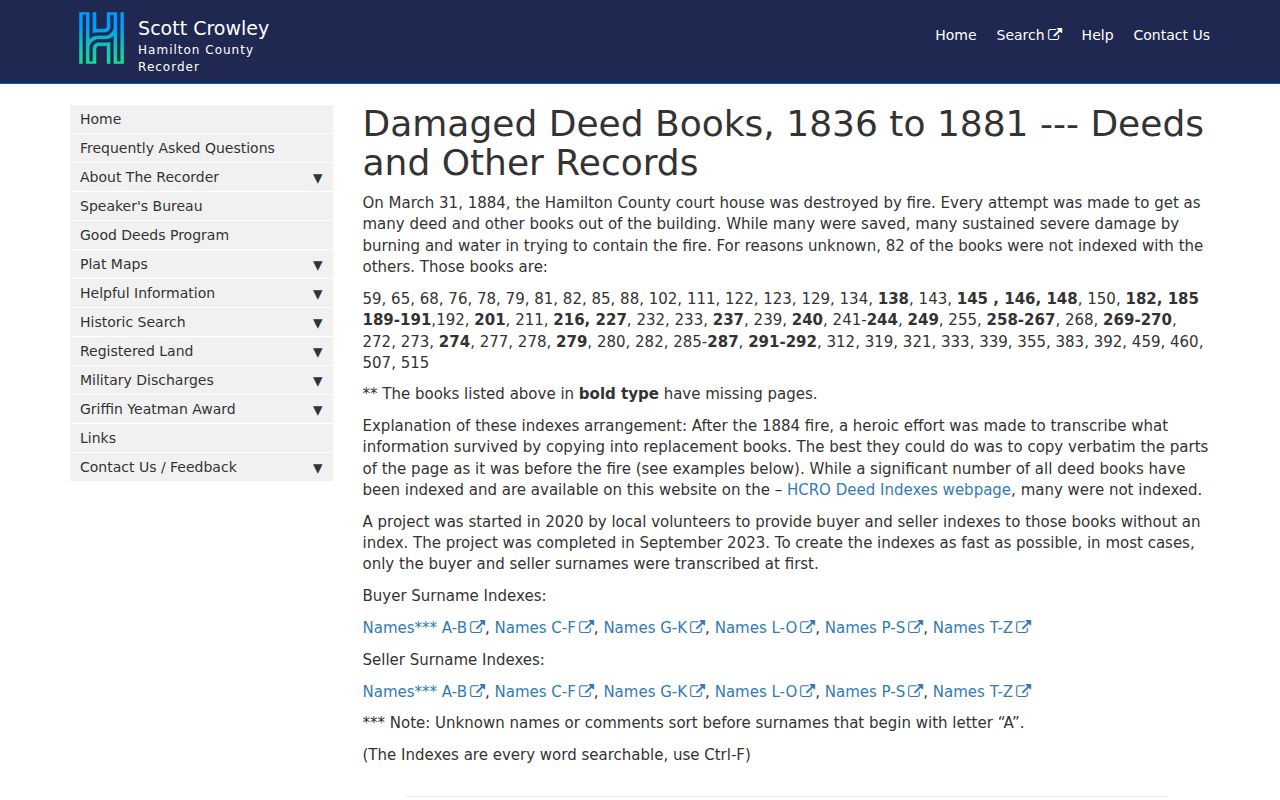
The guide helps distinguish a damaged or copied volume from an ordinary unsuccessful index search.
Lawful Hamilton County House History
Previous-resident research is suited to family history, estate questions, local history, and curiosity about a property. Use dated public records with care, and do not turn a historical address trail into a claim about a living person's present circumstances. When a record appears inconsistent, return to the office or collection that created it, capture the search date and fields used, and keep the unresolved conflict in the notes.
Lawful use. Hamilton County previous residents records support personal historical research; do not use them to stalk, harass, or harm anyone.